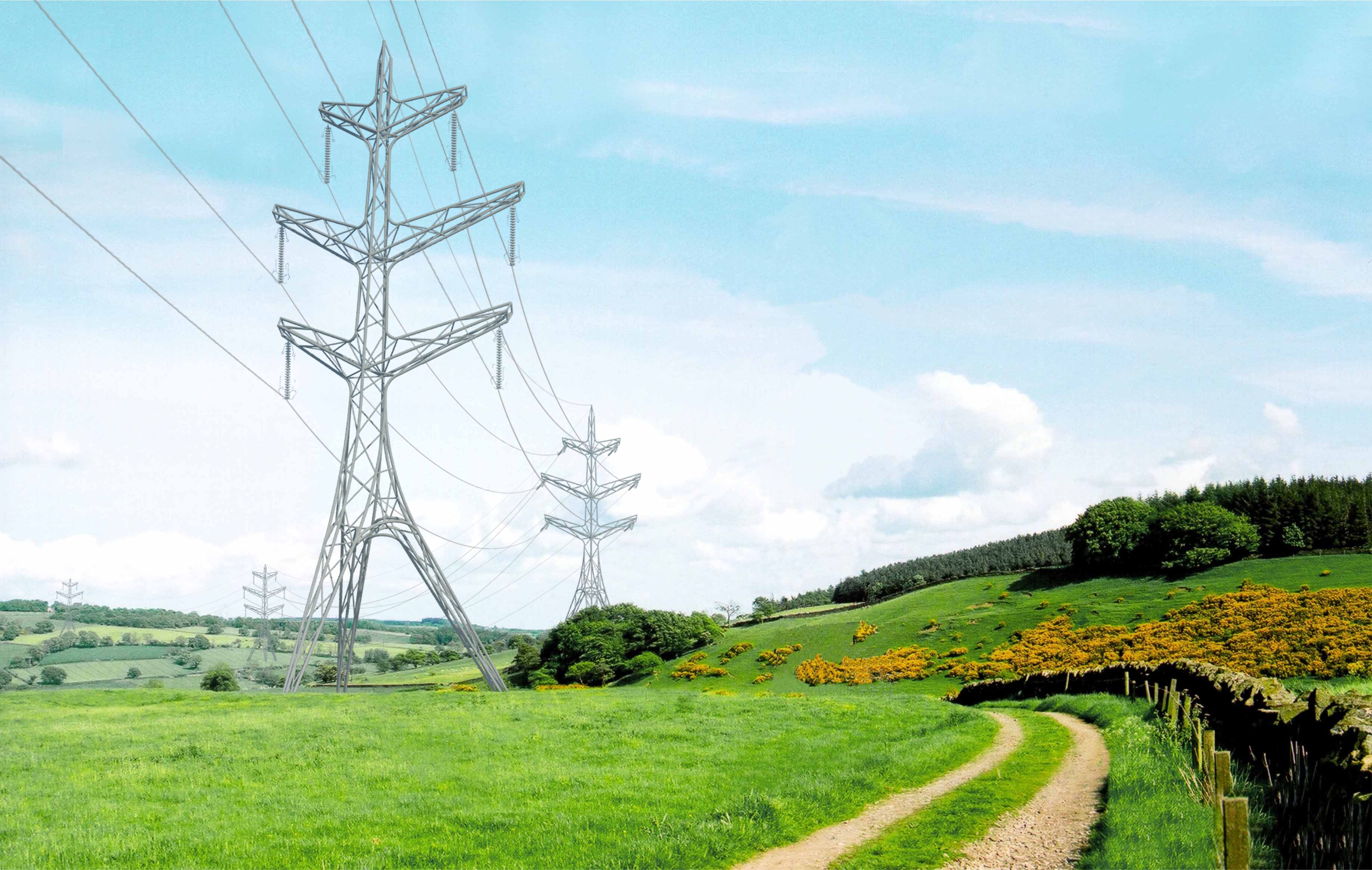
In close collaboration with LUC and Ramboll, MAUC proposed a new design for the electricity pylon for the RIBA pylon design competition held in response to the realization that a shift towards electricity from sustainable energy sources also implies a new energy infrastructure. In a new sustainable future, the energy distribution network has its origin in a different location, new lines need to be drawn and in this effort it was thought to be wise to re-think the design of the pylon.
From the brief: "The challenging target of an 80% reduction in carbon emissions by 2050, means substantial change in our energy infrastructure. We are therefore seeking highly innovative and imaginative solutions that nevertheless respond to the exacting technical requirements and offer the potential for development into deliverable projects. Proposals should be both grounded in reality and be beautiful."
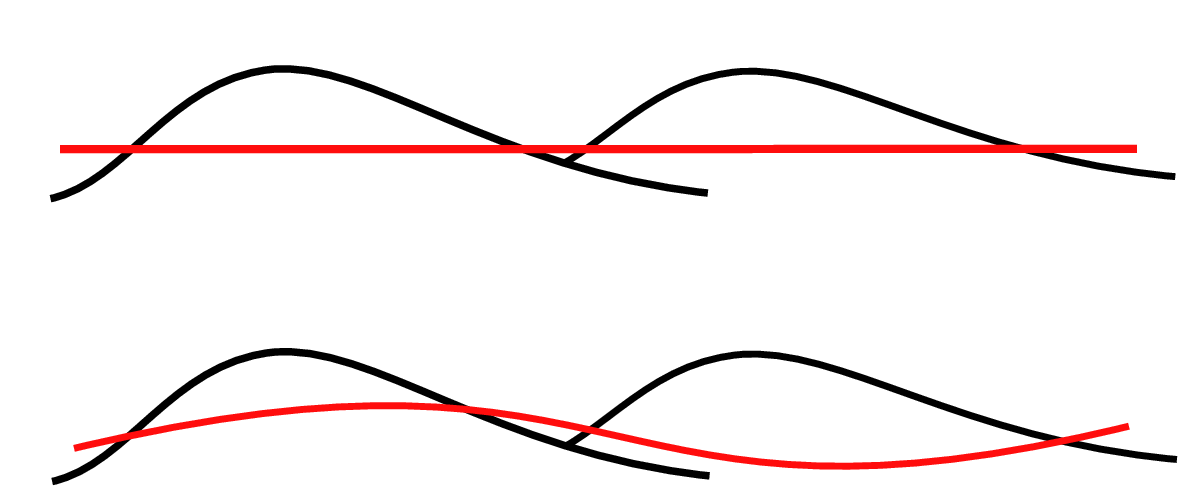
A little known fact about pylons is that they are currently designed to follow a straight trajectory on a flat surface. Any deviation in either warrants a so-called "deviation tower". As such, the pylon is a testament to the industrial age, elements are mass-produced to accommodate the bulk of use cases. In the Scottish landscape however, plotting a straight trajectory on the same height level is quite the challenge. And when one succeeds, the result is a straight line in a hill-scape at best.
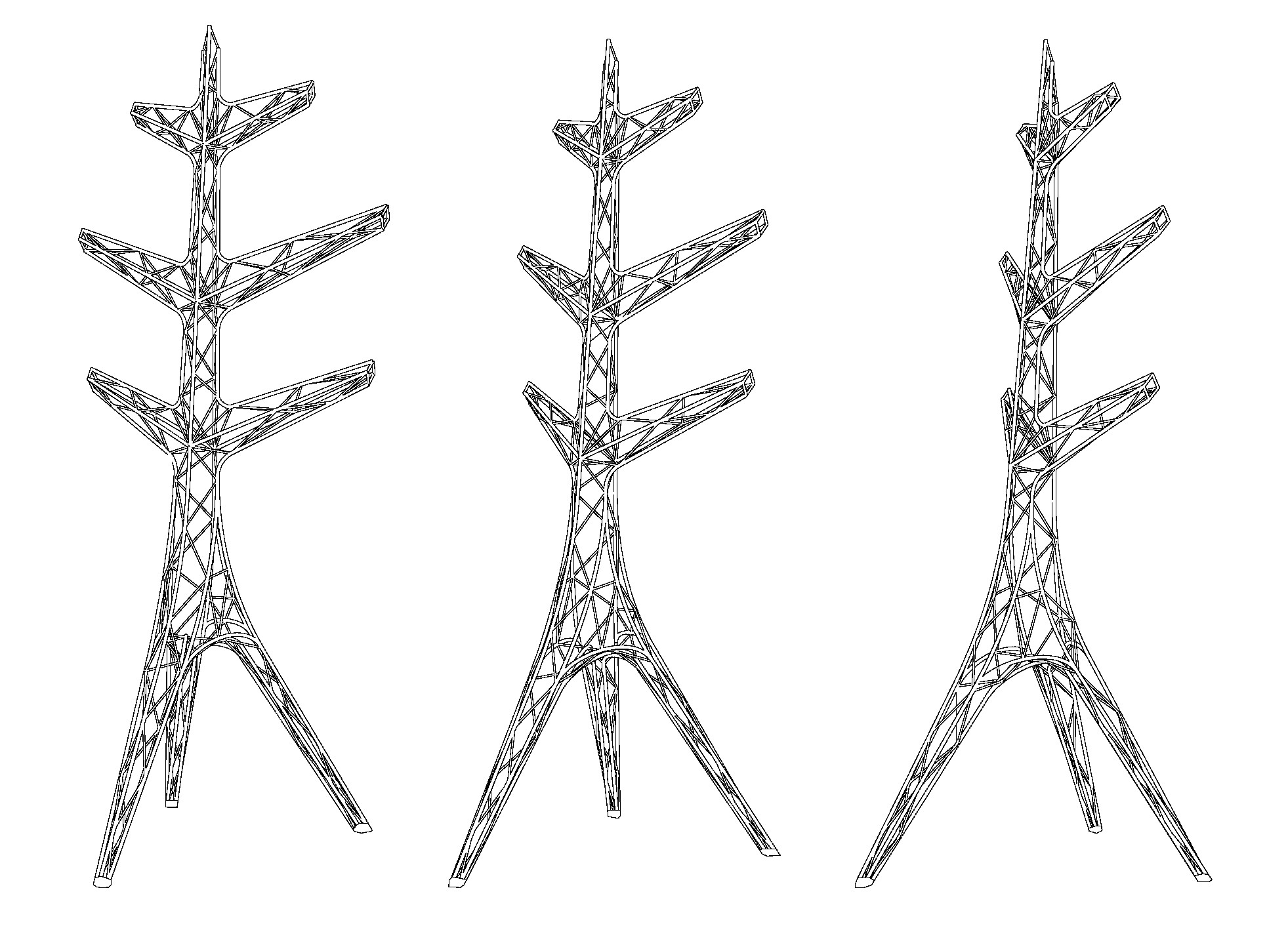
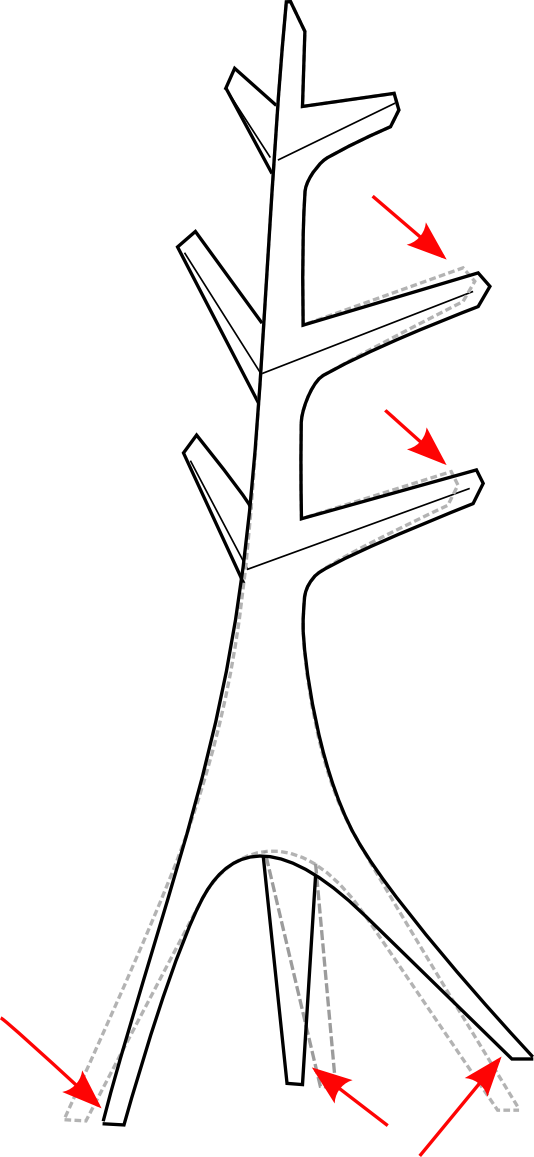
We proposed a generative design that adapts itself to the landscape and a sinuous trajectory. Instead of making the distinction between a "normal" tower and a "deviation" tower, we declared the deviation the norm. The motivation was that in the 21st century it is possible to create mass-customized solutions. Bespoke lattice structures are in fact the most suitable for such an approach as only the lengths of the members need to be customized.
Besides maximum adaptability to circumstance, mass-customized design literally breaks the mold, creating a broader field of possibilities. The aesthetic design considerations for a pylon design depends on two main considerations: footprint and elegance. If one seeks a relation, a connection with the Scottish landscape, rigidity is not a virtue. The landscape flows from horizon to horizon, sometimes calm and collected, sometimes wild and furious. Pylons negotiate the curves and flowing hills, carefully finding its balance and footing, dancing with a quiet exuberance across valleys. The tripod based footprint implies a direction, underlining the trajectory and minimizing the actual impact on the landscape. Whereas the curved column and branches articulate a freedom and an animated silhouette.